
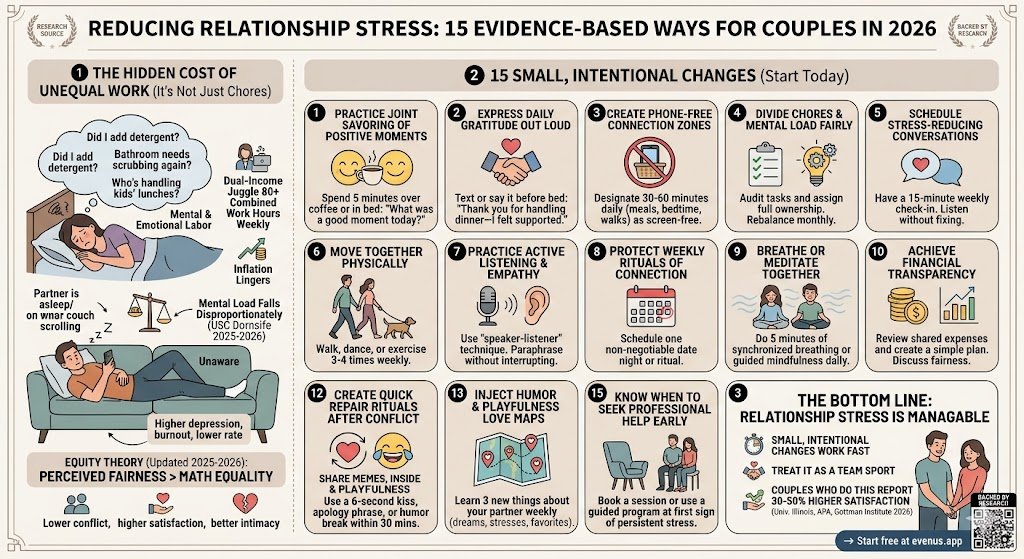
It’s 9 p.m. The day’s demands are finally done, but the air between you feels heavy. One partner scrolls on the couch; the other mentally replays tomorrow’s to-do list while quietly resenting the uneven load. No big fight—just the low hum of chronic stress that quietly erodes connection.
In 2026, relationship stress is more common than ever. Dual-income households juggle 80+ combined work hours weekly, inflation lingers, and the mental load (planning, remembering, coordinating) still falls disproportionately on one partner. A 2025 USC Dornsife study and ongoing 2026 analyses show this invisible burden directly predicts higher depression, burnout, and lower relationship satisfaction. Chronic stress floods the body with cortisol, reduces emotional availability, and kills desire—turning partners into roommates under the same roof.
The good news? Small, intentional changes work fast. Research from the University of Illinois (2026), APA (2025), and Gottman Institute shows that couples who actively reduce stress together report 30–50% higher satisfaction, lower cortisol, and stronger intimacy within weeks. Here are 15 evidence-based ways you can start today—no therapy required, just consistent practice.
15 Ways to Reduce Stress in Your Relationship Today
1. Practice Joint Savoring of Positive Moments
End each day by sharing one “highlight” you both enjoyed. University of Illinois researchers (Larsen et al., 2025–2026, Contemporary Family Therapy) found that couples who savor pleasurable moments together argue less, feel more confident in their future, and buffer against external stress. It lowers cortisol and builds resilience—especially powerful during high-stress periods.
How to do it: Spend 5 minutes over coffee or in bed: “What was a good moment today?” Focus on the feeling together.
2. Express Daily Gratitude Out Loud
Say “thank you” for one specific thing your partner did. Perceived gratitude acts as a powerful stress buffer. Studies (Barton et al., 2023–2025 updates) show it protects relationship satisfaction during financial strain or arguments. A 2025 Frontiers in Psychology study confirmed gratitude mediates support’s positive effects on satisfaction.
How to do it: Text or say it before bed: “Thank you for handling dinner—I felt supported.”
3. Create Phone-Free Connection Zones
Designate 30–60 minutes daily (meals, bedtime, walks) as screen-free. The mere presence of phones increases “micro-ostracism” and stress. Couples who enforce this report deeper conversations and lower daily tension.
How to do it: Use a basket or “Do Not Disturb” mode. Replace scrolling with eye contact and questions.
4. Divide Chores and Mental Load Fairly
Audit tasks (physical + cognitive) and assign full ownership. The USC Fair Play studies (2024–2026) prove that visible, equitable division reduces burnout, depression, and resentment while boosting satisfaction and intimacy.
How to do it: Use a simple spreadsheet or app. Rebalance monthly. Celebrate wins.
5. Schedule Stress-Reducing Conversations
Have a 15-minute weekly “How was your stress today?” check-in using Gottman’s method. Turning toward each other during stress builds resilience. Gottman research shows couples who do this report higher satisfaction and lower conflict.
How to do it: Listen without fixing. Say: “That sounds heavy—what do you need from me?”
6. Move Together Physically
Walk, dance, or exercise side-by-side 3–4 times weekly. Shared activity releases endorphins and oxytocin, lowering cortisol. Studies link couple exercise to better emotional regulation and reduced relationship stress.
How to do it: 20-minute evening walk or joint yoga video. Make it fun, not a chore.
7. Practice Active Listening and Empathy
Use the “speaker-listener” technique: one talks, the other paraphrases without interrupting. This lowers defensive stress. Emotionally Focused Therapy research shows empathy-building cuts conflict and builds safety.
How to do it: “What I hear you saying is… Did I get that right?”
8. Protect Weekly Rituals of Connection
Schedule one non-negotiable date night or ritual (coffee Sunday mornings). Gottman’s “Sound Relationship House” research proves rituals buffer daily stress and maintain fondness.
How to do it: Put it in the calendar like a doctor appointment. Keep it simple and phone-free.
9. Breathe or Meditate Together
Do 5 minutes of synchronized breathing or guided mindfulness daily. APA and mindfulness studies (2025) show shared positive practices lower cortisol and improve co-regulation during stress.
How to do it: Sit facing each other, inhale for 4 counts, exhale together. Apps make it easy.
10. Achieve Financial Transparency
Review shared expenses and create a simple plan. Money stress is the #1 relationship killer. Couples with clear systems (proportional or hybrid splits) report 60–80% fewer arguments.
How to do it: Use a dedicated app. Discuss fairness, not just numbers.
11. Support Individual Self-Care
Encourage (and protect) each other’s solo recharge time. When one partner’s stress drops, the relationship’s overall stress drops. Research links partner-supported self-care to better emotional availability.
How to do it: “You go to the gym—I’ve got the kids.” Celebrate their return.
12. Create Quick Repair Rituals After Conflict
Use a 6-second kiss, apology phrase, or humor break. Gottman research shows successful repair within 30 minutes prevents stress escalation and builds trust.
How to do it: Agree on one phrase: “I’m sorry—can we reset with a hug?”
13. Inject Humor and Playfulness
Share memes, inside jokes, or silly games daily. Play reduces cortisol and rebuilds closeness. Couples who laugh together report lower stress and higher satisfaction.
How to do it: Send one funny text or play a 5-minute silly game before bed.
14. Build Detailed Love Maps
Learn 3 new things about your partner weekly (dreams, stresses, favorites). Gottman studies show strong love maps make couples more resilient to external stress.
How to do it: Ask open questions: “What’s been on your mind lately that I might not know?”
15. Know When to Seek Professional Help Early
Book a session or use a guided program at the first sign of persistent stress. Evidence-based approaches (Gottman, EFT) achieve 70–90% improvement rates. Early intervention prevents small stress from becoming chronic damage.
How to do it: Use apps with built-in prompts or find a couples therapist via Psychology Today.
The Bottom Line
Relationship stress isn’t inevitable—it’s manageable when you treat it as a team sport. These 15 ways, drawn from 2025–2026 studies on savoring, gratitude, equity, and co-regulation, don’t require hours or money. They require intention and consistency. Start with just 2–3 today. In 30 days you’ll notice lower tension, more laughter, and that warm “we’re in this together” feeling returning.
Your relationship doesn’t have to be another source of stress. It can be your safest place. Pick one way right now—maybe a quick gratitude text or a 5-minute walk—and watch the ripple effect begin.
Ready to Lower Stress and Feel Close Again?
Chronic relationship stress doesn’t have to quietly damage your connection and intimacy. evenus.app helps couples reduce tension fast by tracking the mental load, creating fair chore division, and guiding meaningful conversations that actually rebuild closeness. Download your free Relationship Stress Reset Kit — packed with the Relationship Fairness Score, daily gratitude prompts, weekly check-in scripts, mental load audit, and 30-day stress-reduction plan that couples are already using to feel lighter and more connected.
Start reducing stress and restoring your bond today.
→ Get Your Free Relationship Stress Reset Kit
Backed by Research
The 15 strategies in this article are grounded in the latest 2025–2026 research on relationship stress, equity, and co-regulation. Studies from the University of Illinois demonstrate that joint savoring and gratitude significantly buffer daily stress and strengthen partnerships, while the USC Dornsife Fair Play intervention shows that equitable division of chores and mental load reduces burnout, depression, and dramatically improves relationship satisfaction and intimacy.
Key Sources
- University of Illinois – Joint Savoring Study (2026): https://phys.org/news/2026-02-stressed-couples-benefit-joint-savoring.html
- USC Dornsife Public Exchange – Fair Play Studies (2024–2026): https://dornsife.usc.edu/public-exchange/fair-play-study-2024/