
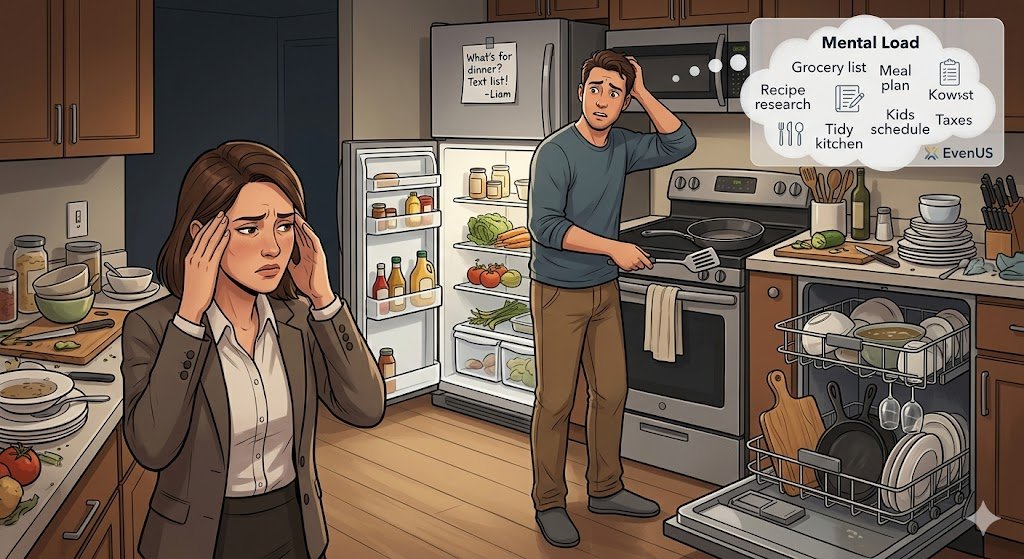
Weaponized Incompetence- The scene is universally recognizable. It is 6:30 PM on a Tuesday. You are exhausted from a full day of work, but it is your partner’s turn to manage dinner. You walk into the kitchen to find them staring blankly into the refrigerator, or helplessly holding a metal spatula over your expensive non-stick Teflon pan.
Then comes the phrase that instantly spikes your cortisol: “I would make the chicken, but you’re just so much better at it than I am. I always dry it out. Can you just show me how to do it one more time?”
Alternatively, it manifests during the cleanup phase. You open the dishwasher to discover a chaotic, physics-defying arrangement: bowls facing upward, filling with dirty water; delicate wine glasses jammed next to heavy cast iron; wooden cutting boards placed on the bottom rack to warp and crack.
This is not a genuine lack of culinary skill. This is a highly effective, deeply destructive behavioral pattern known as Weaponized Incompetence (often referred to by sociologists and psychologists as strategic incompetence).
In the domestic sphere—and particularly in the high-stakes, high-frequency environment of the kitchen—weaponized incompetence is the conscious or subconscious act of performing a shared task so poorly, or claiming it is too complicated to understand, that the competent partner becomes frustrated, steps in to finish it, and stops asking for help in the future.
It is a strategy designed to preserve one partner’s time and comfort at the direct expense of the other partner’s energy and sanity. If left unchecked, it destroys relationship equity and breeds a level of resentment that can rot a partnership from the inside out. Here is the definitive guide to identifying weaponized incompetence in the kitchen and the exact, systemic frameworks required to dismantle it for good.
How to Handle “Weaponized Incompetence” in the Kitchen
1. The Diagnosis: Skill Gap vs. Strategic Incompetence
To solve the problem, you first have to correctly diagnose it. It is entirely possible that your partner genuinely does not know how to poach an egg or properly deglaze a pan. However, a genuine skill gap is accompanied by a desire to learn and a proactive attempt to close that gap. A partner with a skill gap will pull up a YouTube tutorial, follow a recipe step-by-step, or ask specific, clarifying questions without expecting you to take over the physical labor.
Weaponized incompetence, on the other hand, relies on the manufactured illusion of helplessness. It is characterized by the underlying message: My time is more valuable than your exhaustion, and I am willing to play dumb to avoid this work.
Recognizing the Language of Incompetence:
- “I don’t know where the good pans are kept, so I just didn’t start.”
- “I always burn the rice, you should just do it so we don’t ruin dinner.”
- “I loaded the dishwasher, I didn’t know the plates had to face that way. It’s not a big deal.”
- “Just tell me exactly what to chop and how to chop it.”
When your partner uses this language, they are actively shifting the Mental Load—the cognitive labor of project management—back onto your shoulders. They are demanding that you act as their manager, which leads directly to the next issue.
2. The Psychological Toll: The “Parent-Child” Dynamic
The most damaging aspect of weaponized incompetence is not that you have to re-wash a few plates. It is what the behavior does to the romantic architecture of your relationship.
When one partner constantly acts helpless in the kitchen, it forces the other partner into a managerial, parental role. You stop viewing your partner as a capable, equal Co-CEO of your household and start viewing them as a teenager who needs to be monitored, corrected, and managed. This Parent-Child dynamic is absolute poison to intimacy. It is nearly impossible to feel romantically connected to someone you are constantly having to parent through basic life skills.
Furthermore, it creates a toxic cycle of the “blame game.” When the dinner is late or the kitchen is a disaster, the incompetent partner will often deflect: “Well, you didn’t tell me to wipe the counters,” or “You’re just too controlling about how the dishwasher is loaded.” Shifting from an “intern” to a “Co-CEO” requires deep emotional accountability. When logistical systems fail, true partnership means prioritizing systemic solutions over personal scorekeeping. For a deeper look into breaking this toxic cycle, I highly recommend exploring how to stop playing the blame game and take responsibility in your relationship.
3. Strategy One: Stop Rescuing (Let the Rice Burn)
The mechanism that fuels weaponized incompetence is the competent partner’s breaking point. Your partner relies on the fact that your standard of living—and your anxiety about a ruined meal or a messy kitchen—is higher than theirs. They know that if they cut the vegetables slowly enough, or sigh heavily enough while looking at the recipe, you will eventually snap, grab the knife, and say, “Just move, let me do it.”
The moment you say those words, the strategy has succeeded. They have been relieved of duty.
The Fix: You must completely remove the safety net. If it is your partner’s night to own the Kitchen Zone, you must leave the room. Go to the bedroom, take a walk, or read a book. If dinner takes two hours to make, it takes two hours. If they burn the rice, you sit down together and eat burnt rice, or they use their own money to order takeout. You must refuse to step in.
By holding your boundary, you force them to experience the natural consequences of their lack of effort. They are an adult; they will figure out how to feed themselves and their family when the option to be rescued is entirely removed.
4. Strategy Two: Establish the “Minimum Viable Standard” (MVS)
Often, a partner utilizing strategic incompetence will do a “half-job” to technically fulfill their obligation, while leaving the bulk of the invisible work for you. For example, they will cook the meal, but leave every pot, pan, and cutting board encrusted with food on the counter, claiming, “I cooked, you clean.”
The Fix: You cannot hold someone accountable to a standard that has never been explicitly defined. Sit down during a neutral, non-argumentative time (not while the kitchen is currently a mess) and define the “Minimum Viable Standard” (MVS) for the Kitchen Zone.
Agree as a team that “cooking dinner” is not just the act of putting food on a plate. The MVS means the meal is prepared, the leftovers are stored in Tupperware, the counters are wiped down, and the dishwasher is loaded and running. If the MVS is not met, the task is incomplete. Having this defined baseline prevents the “I didn’t know I was supposed to do that” excuse.
5. Strategy Three: Shift from Micro-Tasks to “Zone Ownership”
Weaponized incompetence thrives in an environment of micro-management. If you ask your partner to “chop the onions,” they can easily mess up that one small task, requiring you to fix it and finish the rest of the meal.
The Fix: Stop delegating individual chores and start assigning total Zone Ownership.
When a partner owns the Kitchen Zone for the evening (or the week), they own the planning, the execution, and the quality control. They cannot claim incompetence because they are the sole project manager. If they genuinely do not know how to cook a complex, multi-course meal, their Zone Ownership means they must research an easy 20-minute sheet-pan recipe, figure out a meal kit delivery, or plan a slow-cooker meal. The cognitive labor of figuring it out belongs entirely to them.
6. The Ultimate Solution: Automating Accountability with EvenUS
The hardest part of dismantling weaponized incompetence is that constantly calling it out makes you feel like a nagging supervisor. It forces you to constantly monitor the scoreboard, leading to exhaustion and repetitive arguments.
To permanently fix the dynamic, you have to outsource the accountability to a neutral third party. This is why modern couples are moving away from fridge whiteboards and turning to dedicated equity platforms to manage their domestic lives.
By utilizing a system like the EvenUS app, you shift the dynamic from a subjective personal argument to an objective, systemic standard.
- Track the Invisible Work: EvenUS allows couples to log not just who bought the groceries or who stood at the stove, but who carried the heavy cognitive labor of meal planning and inventory management.
- Validate the Zones: When the Kitchen Zone is explicitly assigned and tracked within the app, the “incompetent” partner can clearly see how their lack of execution throws off the entire balance of the relationship. It makes the invisible visible.
- A Neutral Baseline: The app acts as the shared ledger for both your household tasks and your proportional finances. You no longer have to argue about who did what, or who owes what for the takeout ordered after a burned dinner. The data speaks for itself, forcing the under-contributing partner to face their own metrics without you ever having to raise your voice.
You are a romantic partner, not a kitchen safety net. By holding your boundaries, defining the standard of execution, and utilizing systemic tools to track your household equity, you can permanently evict weaponized incompetence from your kitchen and build a partnership grounded in mutual respect.